Now is the time to conduct an in - depth analysis of the functional differences between the widely - used Thunderbolt™ 3 connection and its successor, Thunderbolt™ 4.
In a nutshell, Thunderbolt™ 4 represents an advancement in the Thunderbolt™ connection protocol, enabling rapid data transfer, device charging, and high - resolution video transmission through the ubiquitous USB - C interface. While there are not many significant changes at the underlying technological level, there are several crucial aspects to note regarding the recognized specifications.
Thunderbolt™ 3: The Former Cham-pion
Until recently, Thunderbolt™ 3 has been the gold standard in the field of high - speed connections. The initial Thunderbolt™ and Thunderbolt™ 2 protocols utilized DisplayPort connectors to transmit high - resolution video streams. With USB - C emerging as the mainstream connector, Thunderbolt™ 3 made the transition to the Type - C connector in 2014 and has since flourished.
In addition to the substantial upgrade in connection methods, Thunderbolt™ 3 doubled its bandwidth compared to its predecessor, reaching 20 gigabits per second (two bidirectional 10 Gbps channels). It became one of the fastest ports on the market at the time, actually providing a transmission capacity of 40 gigabits per second (two bidirectional channels with a transmission speed of 20 Gbps each).
In 2017, Intel collaborated closely with Dell, HP, and Lenovo to launch desktops and laptops equipped with Thunderbolt™ 3 interfaces. Nowadays, a large proportion of mid - range and high - end laptops are equipped with Thunderbolt™ interfaces, making Thunderbolt™ 3 one of the most popular interfaces in the market.
From a visual perspective, Thunderbolt™ 3 can simultaneously drive two external 4K displays at 60Hz or one 4K display at 120Hz. Moreover, its power consumption is only half that of Thunderbolt™ 2. It can deliver 100W of power to the host system, often eliminating the need for users to install a separate power supply.
Thunderbolt™ 4: New Functional Highlights
Considering all the specifications, Thunderbolt™ 4 (sometimes abbreviated as TB4) does not represent a revolutionary leap over the Thunderbolt™ 3 protocol.
The main difference lies in the more stringent functional requirements for certification. To obtain certification, TB4 must meet higher functional standards than Thunderbolt™ 3.
In terms of display support, Thunderbolt™ 4 laptops are required to support up to two 4K displays or one 8K display, while Thunderbolt™ 3 only needs to support one 4K display. This has caused confusion among some consumers, who are unsure whether the ports on the devices they purchase support one or two 4K - resolution displays.
Additionally, the data transmission requirements for TB4 are twice those of the TB3 standard. The available speed for devices reaches 32Gbps, allowing external storage speeds of up to 3,000 MB/s.
Distinguishing Connection Types
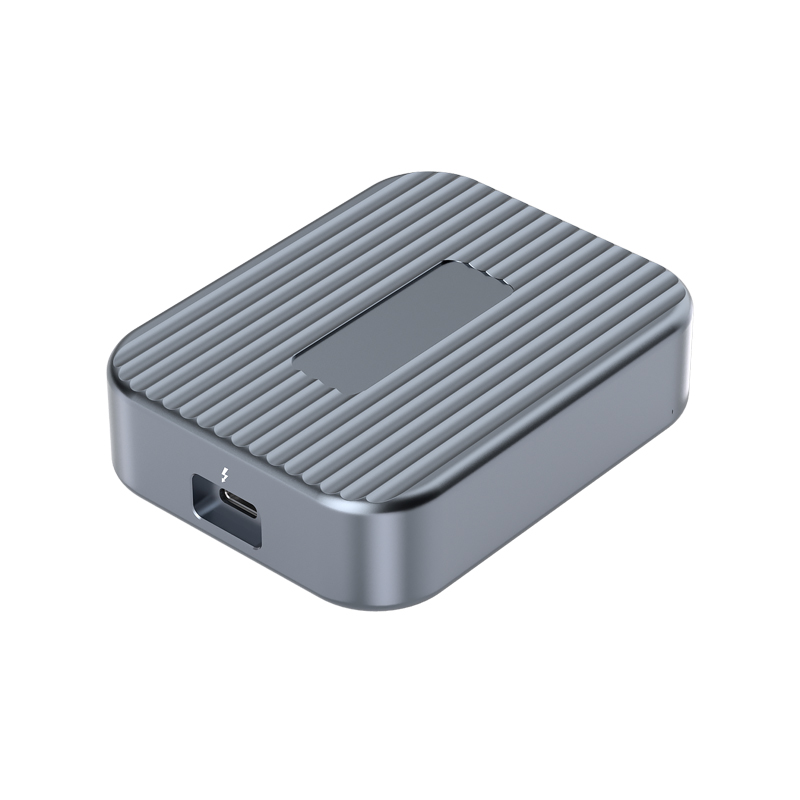
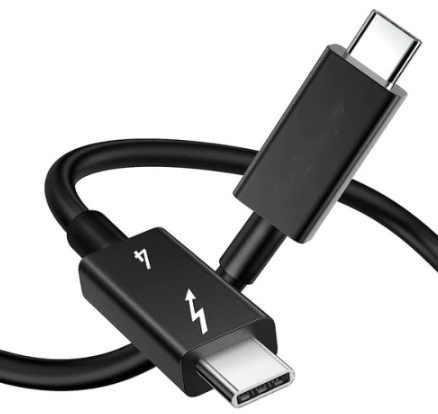
How can we tell the difference between USB4 and Thunderbolt™ 4? Are they exactly the same? This is a common question for those who tend to confuse physical data transfer connectors with standards. Both Thunderbolt™ 4 and USB4 use USB - C connectors, so apart from minor differences, the connection ports look identical. However, all Thunderbolt™ 4 ports are marked with a small lightning bolt icon above them. Be careful not to confuse it with the fast - charging logo commonly seen on many modern laptops.
Furthermore, Thunderbolt 4 is compatible with all previous generations of Thunderbolt™ and USB peripherals, although not all physical connection types are the same.
Upgrades in Data Transmission and Visual Experience
Although Thunderbolt™ 4 connections still maintain a rate of 40 Gbps, TB4 not only retains the dual - 4K - display function of TB3 but also significantly enhances single - display performance. TB3 allows a single display to play videos at up to 5K resolution, while TB4 can now provide a resolution of up to 8K when using a single display.
Conclusion and Outlook
Although Thunderbolt™ 4 may not introduce brand - new and thrilling display functions to computer configurations, it greatly boosts users' confidence in the specifications and functions of products that claim to support this protocol. With the introduction of USB4 and the natural evolution of industry technology, the transition to Thunderbolt™ 4 has become an inevitable trend.
Product Recommendation: PEC - TU007 Thunderbolt™ 4 Docking Station
Our Thunderbolt™ 4 PEC - TU007 docking station far surpasses standard docking stations in terms of data and video performance. It is an ideal choice for content creators, gamers, and live streamers, enabling them to record and capture videos at the highest settings. This docking station offers high compatibility and excellent performance, providing multifunctionality without sacrificing any performance. By connecting via Thunderbolt™ 4, you can easily enjoy the efficiency and convenience brought by dual external displays.